VR in the language classroom: beneficial, affordable, inclusive.
VR in the language classroom: beneficial, affordable, inclusive.
 Gina Rodriguez
 How you can easily start making use of the benefits of VR if you focus on pedagogy and your students needs, instead of the technology
GUEST POST BY NERGIZ KERN for GR School Marketing | Education Trends

Nergiz Kern is a co-author of the book A–Z of Immersive Language Learning and Teaching in Virtual Reality.
She is an EdTech and TESOL specialist with experience in emerging technologies in language learning starting 2008. Nergiz has taught general English, ESP and EAP internationally, face-to-face, and online at universities, language schools and in companies for 25 years.
She has executive leadership and business experience in the language education and EdTech field. Nergiz is also a professional futurist. She provides support to language institutions who want to integrate immersive learning or prepare for the future of language education through her writings, courses, foresight workshops and consultancy work
Beyond the Hype: How VR Really Supports Language Learning
If you’ve dismissed virtual reality (VR) as too complex, expensive, or irrelevant for your language school, you’re not alone. Many educators assume VR is only for tech-savvy teachers or language schools with a high budget.
You might have also heard about VR headsets making users feel dizzy, or other issues related to access. And hasn’t the VR fad passed anyway? We need to focus on AI now. Right? As a language educator and immersive language specialist, I’ve spent years exploring how VR can support language learning—not as a futuristic gimmick, but as a practical, accessible tool. The goal isn’t to ‘revolutionise’ education, but to offer students what is often difficult to achieve consistently and for all students in the classroom: context, an environment where they feel safe to make mistakes, and experiences that are out of reach for practical, safety or economic reasons. And, if you were wondering, genAI – the currently hyped technology — is integrated in most VR platforms.
Experience virtual reality with or without a headset
When most people think of VR, they picture a person wearing a bulky headset, often jokingly called “a shoe box”. While headsets are part of the story, they’re not the whole story.
You can experience VR on a range of devices:
- high-end headset (e.g. Meta Quest, HTC VIVE, Pico),
- simpler and cheaper VR headsets, sometimes specifically designed for the classroom
- inexpensive plastic or cardboard viewers + your smartphone (you can even have your logo printed on these)
- tablet or computer
VR Is About Immersion, Not Just Headsets
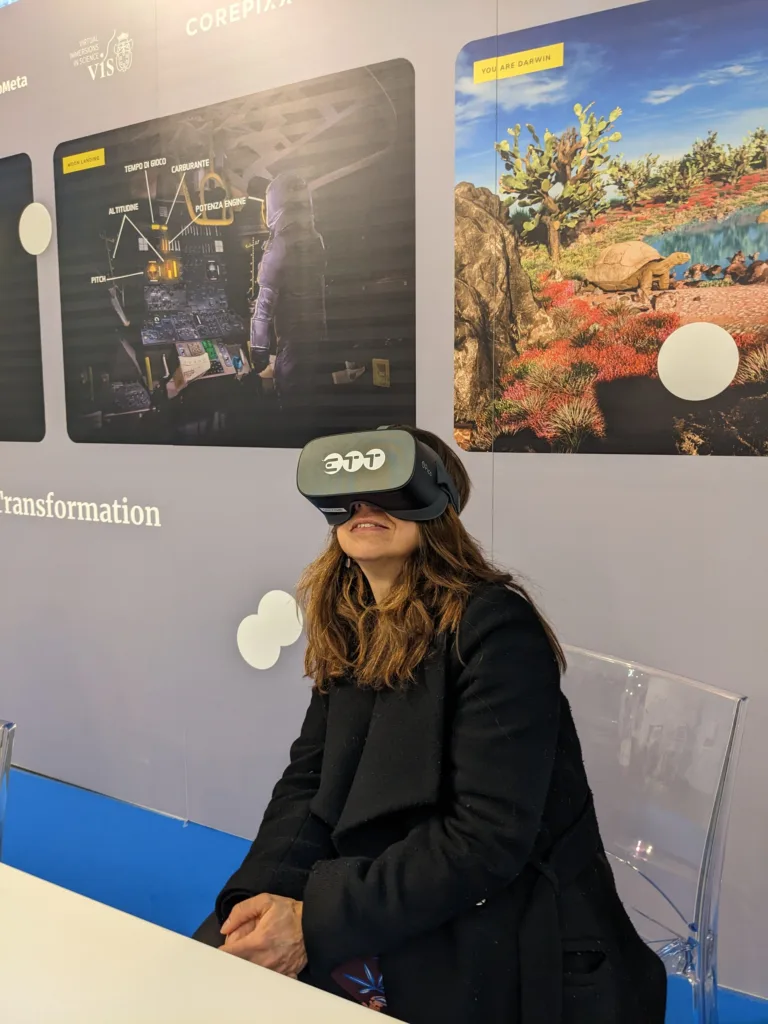
VR is about immersion—the feeling of being “in” an experience, not just observing it. This doesn’t always require high-end technology. Most of the benefits of VR for language learning can be achieved with or without a headset if the lessons and activities are designed well. Think about a time when you were completely immersed in a film or a book. This is called mental immersion. VR experiences are a combination of technical immersion (through the VR headset, 3D graphics and sound, interactive features) and mental immersion (a good story/narrative, authentic and meaningful activities, and social interaction).
Technical immersion on its own does not lead to learning just like dropping a student in a country where the target language is spoken does not automatically lead to improved learning. It’s the social connections and interactions, authentic activities and exposure to the culture first-hand. For VR experiences this means that by focusing on mental immersion, you can make up for the reduced technical immersion when you are not using a VR headset. In fact, research, including one very recent study, shows that the learning outcomes of students are comparable in groups that used a VR headset and others that used a desktop computer.
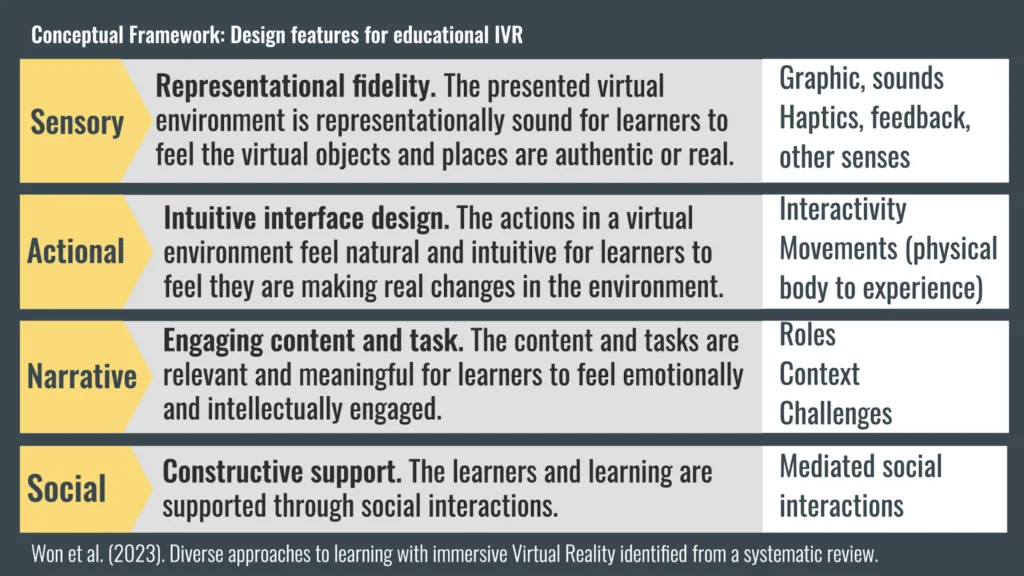
This understanding of immersion frees us from a technology-first/centred view of VR. It allows us to focus on the pedagogy and the diverse needs of our students. What are the problems we want to solve? What do our students need? And can VR help us with these? This is where we need to look at the benefits that VR can have for language learning.
Why Use VR for Language Learning?
- VR supports contextualised (situated), experiential, active learning. It gives students the opportunity to visit places and be in situations where the language they are learning is used naturally; they can do and experience things together (in multi-user social VR) rather than only passively reading or watching about other people in course book materials.
- 360-degree videos can take students to places or put them in situations they might otherwise not be able to experience easily and safely.
- If VR sessions are integrated into blended learning and extended into projects, students can engage in project-based (or challenge-based, problem-based) activities that help themencounter the language they are learning multiple times in multiple different ways, while also learning 21st century such as critical thinking, collaboration, creativity and digital skills.
- Many different pedagogical approaches can be used with VR besides the ones mentioned in the points above: task-based Learning, Total Physical Response (TPR), game-based learning, social learning, etc.
- VR can help with vocabulary learning and retention
- VR can get learners to engage emotionally because what happens in VR is experienced as real
- VR can help reduce foreign language anxiety (FLA). Students can ‘hide’ behind an avatar, which makes them less inhibited when they have to speak. There is plenty of research that shows that students speak more, at a higher competency level than in the classroom, and even with improved pronunciation].
- VR apps with embodied conversational AI (genAI) can also help reduce FLA and provide 24/7 practice partners who are patient and non-judgemental. But guardrails need to be in place so that conversations are safe for the students.
VR is appropriate for children, adults whether in general English or ESP courses
VR is not limited to one age group or to general English only. There is often this misconception when teachers see cartoonish VR environments. However, firstly, VR can consist of 360-degree videos and images of real places.
And secondly, animated videos are used in ESP, so why not put the learner within the animation so they feel more immersed in the learning?
In fact, many vocational, professional hard- and soft-skills training happens in VR, as well as conferences and fairs with hundreds and even thousands of participants.
Classroom Activity Ideas with VR
You don’t need to conduct full lessons in VR. VR can be a small part of the lessons, integrated into a variety of activities, from simple role-plays to complex projects. Here are a few ideas:
Avatar Introductions: Students create avatars and describe their appearance and personality. This is a great icebreaker for introducing VR. They can use oral and written descriptions, using screenshots or video clips (screen recordings) of their avatars.
Scene Descriptions: Students watch a 360-degree video or visit a virtual world and take screenshots. They describe their experience using the images. Follow up with a writing activity.
Virtual Drawing: One student describes a scene or object, and another student draws it in a VR painting app like OpenBrush.
Role-Play Recordings: Students practice a role-play in a virtual scene (e.g. on the FrameVR platform) and record a short video. Students can watch their own role-plays and analyse the language they have used, or they can receive delayed peer and teacher feedback.
Presentation and interview practice: Students practise giving presentations or going through an job interview in a virtual conference room (on VirtualSpeech or similar), talking to NPCs (non-playing characters) or embodied conversational AI chatbots to gain confidence before they present in front of their classmates.
Diary Entries from Pollinator Park: After exploring Pollinator Park and reading the main characters’ diary entries, students write their own diary entries, focusing on grammar and vocabulary from the lesson.
Virtual museum visit: This is a nice project for an online language class, using Google Cardboard to visit virtual museums, followed by creating audio recordings about the visit.
Integrate VR and pedagogy
VR in language learning isn’t about replacing what you do; it’s not even a must have, it’s about enhancing your programme where it makes sense and solves a real problem.
Start small and with the devices and tools that you already have. See how your students and teachers respond and then gradually integrate VR into the curriculum.
You can highlight that you are using VR, but one mistake that I believe some language schools made when we were in the middle of the VR hype in 2021-22 is to quickly offer a separate VR programme rather than integrating it into their existing programmes. This is because they wanted to quickly benefit from the high interest in VR during this period. There was no time to test it out, to think about it in pedagogical or long-term, sustainable business terms. It was just an add-on, so in many cases this approach didn’t work, and the programmes where abandoned or are dying a slow death.
For a successful technology (or new pedagogy) to take hold and be accepted and successful long-term, you need a gradual, thoughtful approach. This is true whether you want to introduce online or blended learning or a new teaching method. There is no rush. It’s when the hype phase is over that the real development starts, slowly but steadily.
Even though some technology is overhyped and cannot deliver quickly enough before disillusionment sets in, some technologies do not go away. Sometimes, it simply takes longer than initially promised and hoped for the technology to get developed fully, be easy enough to use, and become mainstream.’
Kern, 2024
Virtual reality is a technology that allows for active, collaborative, creative, student-centred learning. It is becoming easier to access and use, as well as to create in it. Therefore, it isn’t going away, and it’s worth taking your time to explore it. This way, you will be offering your learners a valuable experience that helps them learn better, and benefitting as a business by being among the Early Majority users.
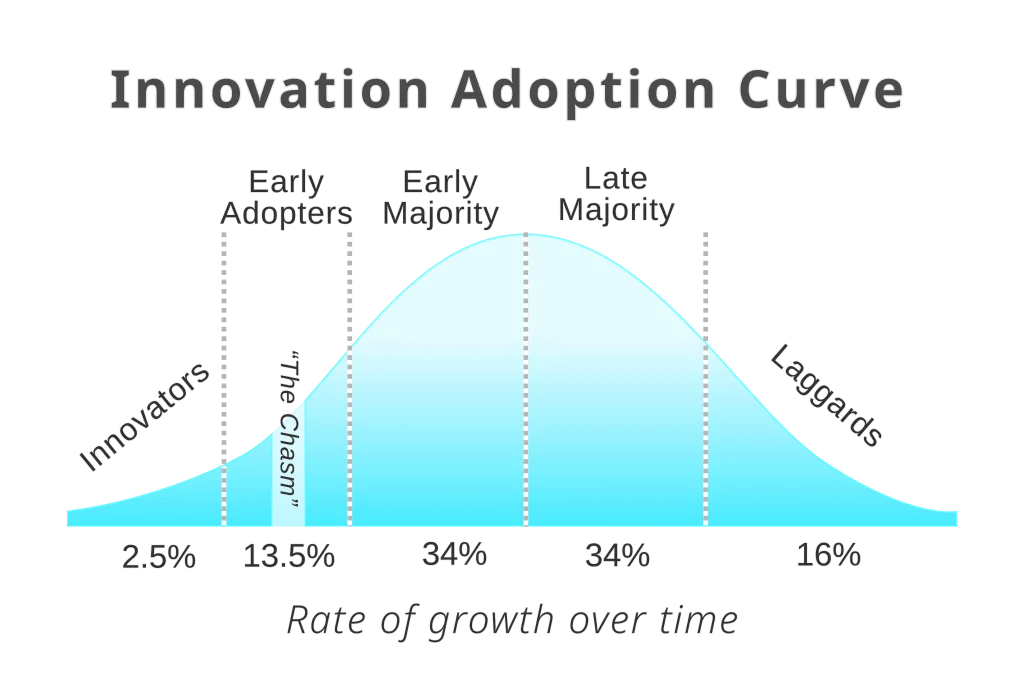
VR in Language Teaching: Take the next step!
What current or potential future problem could VR help you solve?
What’s one VR activity you could integrate in your classroom as a first step? Share your ideas or questions—I’d love to hear how it goes.
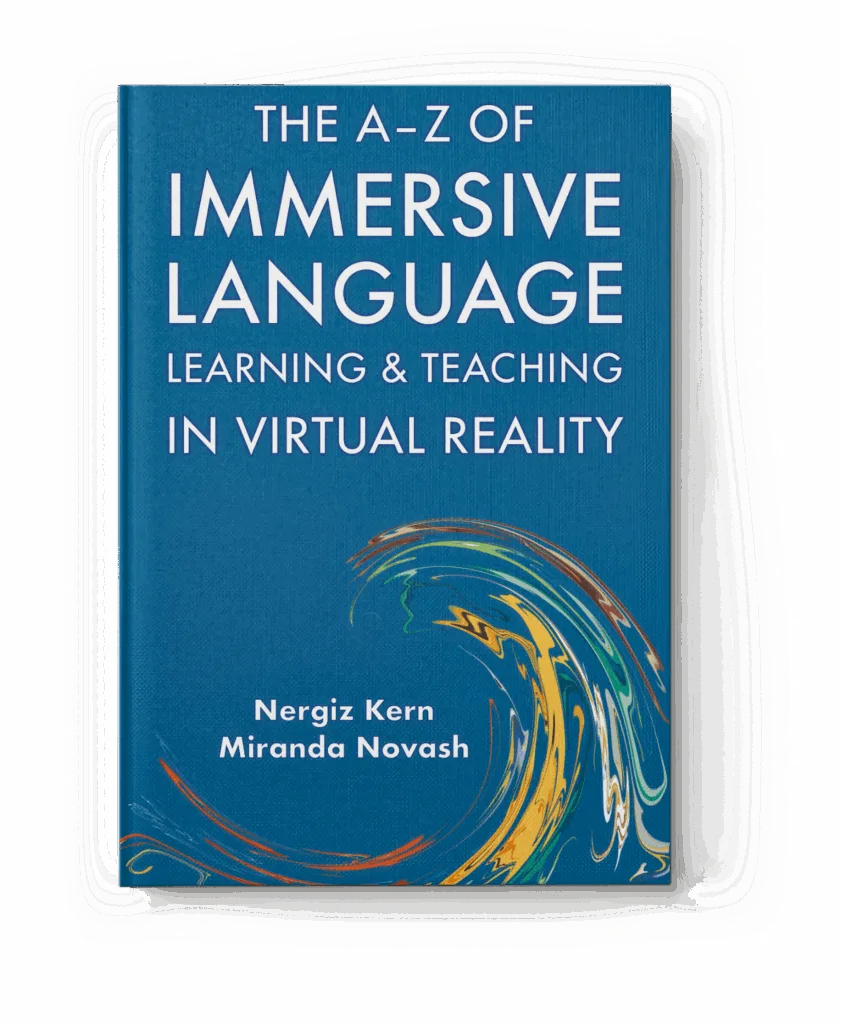
If you need more information on immersive language learning and actionable tasks to work through, read ‘The A–Z of Immersive Language Learning and Teaching in Virtual Reality’ with your team, and work through the guided tasks at the end of each entry. Here is an example:
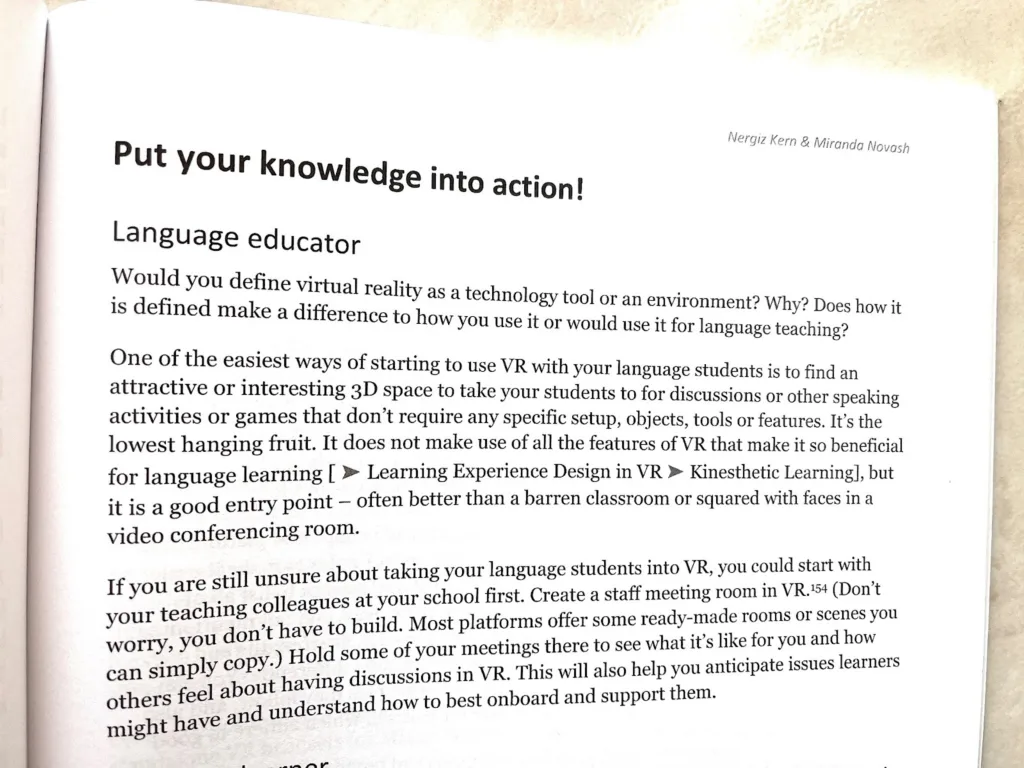
[Extract from the A–Z Book, U is for Unplugged Teaching, p. 153]
Want even more resources? Visit Nergiz Kern’s website and check out the VR Resources and Publications pages for information on VR for language learning.
You are reading the GR School Marketing Blog: we welcome guest blog posts about education trends in ELT. If you want to contribute get in touch.