Completing your CELTA is a massive achievement and if you’ve just completed it, congratulations! Getting CELTA is like getting a passport as it allows you teach English internationally. But once the final lesson is delivered and your certificate is on its way, a new challenge begins: how to get a better TEFL job after CELTA?!
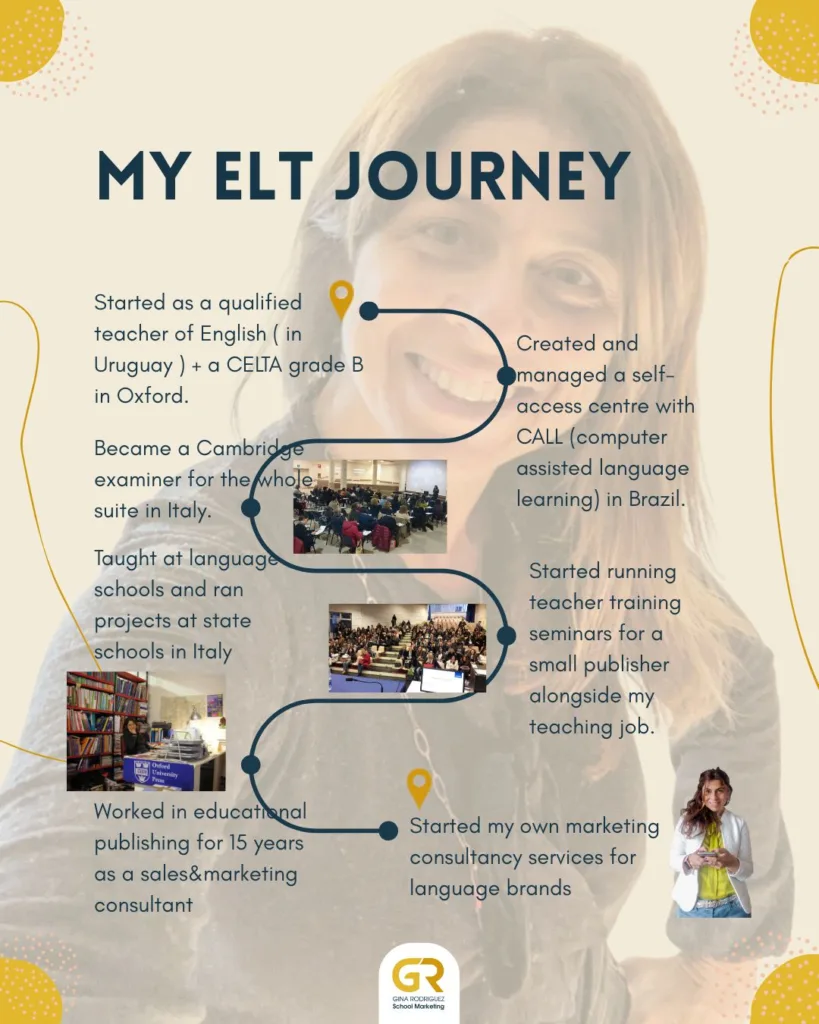
About me: Hi, I’m Gina Rodriguez. I’m a qualified Digital Marketing Specialist and I work as a Marketing Consultant for the language education sector . I have 25+ years experience in the English Language Teaching (ELT) industry.
What I do: I support language brands with building an engaging online presence to stand out from competitors, especially chains and cheaper alternatives. My clients learn to keep a steady, professional presence without spending hours guessing what to post.
How do you stand out in a sea of newly qualified CELTA teachers?
Your CV will outline your credentials, previous experience, and CELTA grade. But in today’s highly competitive ELT job market, language schools are often looking for an extra insight into a candidate’s personality. They want to make sure whether you’ll be a good fit for their team and learners beyond your qualifications.
That’s where your online presence and, generally speaking, your personal brand comes into play.
Interested to know how? Read on!
Why an Online Presence Is Now Essential for New Teachers
People work with people they know, like and trust. A well-planned social media presence can give you the advantage to be known, liked and trusted by potential employers and it’s an opportunity you must grab as early as you can in your ELT career.
In a world where language schools and recruiters check social media as part of their hiring process, your digital footprint has become a “silent spokesperson”. It can either open doors for you or shut them.
A well-planned online presence helps a CELTA holder to:
Showcase values and professionalism
Make a lasting impression (via your digital footprint)
Be visible in the sector to potential employers
If you’re not visible online, you are missing an opportunity. But if you’re active and “pro-active” online, you give potential employers a chance to get an extra insight into what makes you a better candidate and a reason for them to move forward and call you for a job interview.
The moment you start building your online presence by being on social media, blogging or having your own website you’re giving people something to connect with. You’re giving them a reason to remember you and you’re building an online presence that will pave the way to new opportunities and increase your employability after CELTA. This is particularly important if you are a non-native speaker.
What Is a Personal Brand in ELT?
Personal branding might sound like something reserved for influencers or CEOs, but it’s become increasingly relevant for professionals in all sectors including the ELT one.
There are various definitions of personal branding on the net and the one I think embodies the concept really well for us in the language education sector is this one:
Attract roles aligned with your teaching style and values
Secure better job opportunities and contracts
Build trust with schools, recruiters, and students
Overcome stereotypes (hello native-speakerism!)
And no, you don’t need to be experienced to start building an online presence. You just need to be authentic and consistent, especially if you’re navigating life after CELTA.
My Personal Story: From Overlooked to Hired as a Non-Native Teacher of English
Early in my career in language education, when I moved to Italy, I faced a challenge that many non-native CELTA teachers will recognise:
I was already a qualified teacher with a teaching degree in English as a foreign language and a CELTA certificate grade B. By then I had already worked in language schools in three different countries. Feeling confident about my experience and qualifications and proud of my letters of recommendation, I began to look for a job as an EFL teacher but I was turned down at every single place. The reason? My CV ticked many boxes except for the nationality.
The Struggles of a Qualified but Unknown Non-Native Teacher
I was a non-native teacher of English, and no one really knew me or how I could help students progress. After some painful research, I was offered a position in a language school only because they were short of staff and, of course, I was offered a temporary three-month contract to fill a gap.
I realised that sending my CV wasn’t enough to convince language schools I was a good asset for them. If I wanted to be considered for a well-paid position in ELT, I needed to show up differently so I started:
Attending ELT events to network
Contributing to focus groups organized by publishers
Using LinkedIn to connect with other ELT professionals and potential employers
Sharing my work, my struggles and my small wins.
Slowly, my name became familiar. People saw my passion, experience, and commitment. That visibility eventually led to roles as a Cambridge examiner, teacher trainer, and sales & marketing consultant in the publishing sector for Richmond, Santillana, Delta Publishing and Oxford University Press.
Building My Personal Brand Without Even Realising
None of it would have happened if I hadn’t taken control of how I showed up online and offline. Building a personal brand is a must for professionals in all sectors, including the ELT one. Ideally, you need to build your personal brand both online and offline.
This proactive approach helped shape my career path in ELT and made all the difference in how I was perceived by potential employers. In other words I was building a personal brand without even knowing I was doing that.
Choosing the Social Media Platform for your Personal Brand
Social Media is undeniably a powerful tool to make yourself known and generate the so called KLT factor. (Know, LIke, Trust). Remember that potential clients or employers need to know you, like you and trust you to decide to work with you.
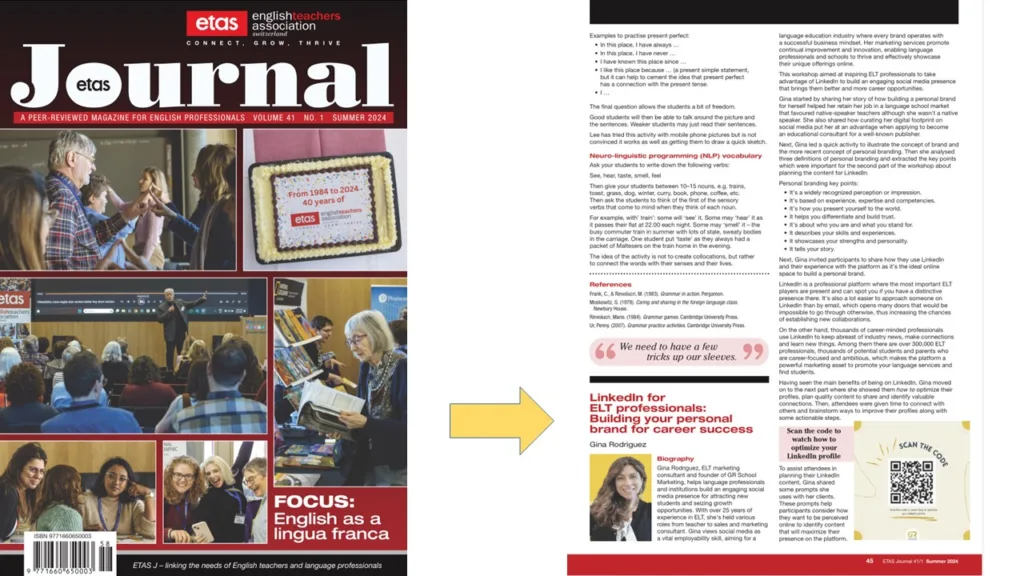
You don’t need to be on every social media platform. If you’re going to focus your energy anywhere, start with a platform where your target students are. If you are aiming for getting a job in a language school or a collaboration with ELT players, like edtechs, publishers or online platforms, then I strongly recommendLinkedIn as a good place to get started for the reasons I explain in LinkedIn for ELT Teachers: Building your Personal Brand for Career Success
Generally speaking, social media is a great asset to start building your personal brand and you don’t need to wait to be experienced to do so. However, you do need to be careful and not to fall into the trap of following social media advice from non-marketers because it can easily lead you to overwhelm and burnout as I explain in “Social Media Strategy: Myths to avoid“.
Next Steps After CELTA: Training, Strategy, and Support
If you’re a newly qualified CELTA teacher and want to learn what to post on social media to boost your visibility and get hired after CELTA, check out the other articles in this blog for tips and inspiration.
As well as this, consider booking a free discovery call with me to explore affordable solutions that will help you avoid wasting time and energy on wrong social media practices.
If you’re a CELTA centre and want to offer added value to your CELTA trainees, consider including a career path session to support them. I run hands-on workshops on personal branding and building a strong online presence, so your CELTA graduates feel more confident and prepared to show up online. It’s a clever way to set your centre apart in a competitive CELTA training landscape.
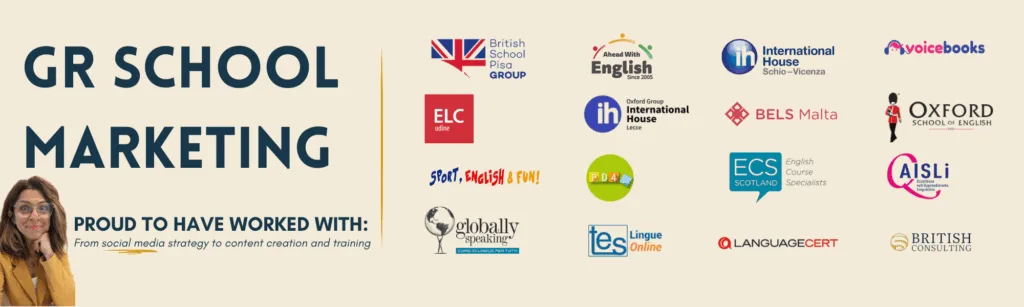
Trusted by quality language schools across Europe.
From social media strategy to content creation and training, GR School Marketing supports language education brands in building a strong online presence.


 Gina Rodriguez